Introduction
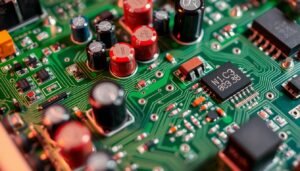
In the rapidly evolving landscape of technology, the real revolution is quietly unfolding in the world of electronic components. These tiny, yet mighty elements are the foundation of our modern digital era, shaping everything from the smartphones in our pockets to the satellites orbiting our planet. While flashy gadgets and breakthrough software often steal the spotlight, it’s the sophisticated dance of transistors, semiconductors, and circuits that truly drives innovation forward.
As we peer into the future, these electronic components emerge not just as supporting players, but as leading forces charting the course of technological advancement. With each microscopic leap in design and function, they unlock new possibilities, transforming how we interact with technology and its role in our daily lives. From the realms of communication to healthcare, these components are not merely parts of a larger machine; they are the heartbeats of progress, echoing the human spirit’s relentless pursuit of advancement and efficiency. This is the story of how these unsung heroes are quietly, yet indomitably, revolutionizing our world.
The Rise of Microelectronics
At the core of this revolution lies microelectronics – the science of making electronic components smaller, faster, and more powerful. The last decade has seen a quantum leap in microelectronic technology. We’ve moved from bulky transistors to microchips the size of a fingernail, capable of performing billions of calculations per second.
The implications are staggering. With more powerful microchips, smartphones have become not just communication devices but mini-computers, capable of complex tasks like real-time language translation and augmented reality. In the medical field, microelectronics enables devices like smart insulin pumps and portable diagnostics, making healthcare more accessible and personalized.
Nanotechnology: The Next Frontier
Nanotechnology takes this a step further. Imagine electronic components so small they can interact with individual cells in the human body. This isn’t science fiction; it’s the next frontier in technology. Researchers are developing nanoscale sensors that can monitor everything from blood sugar levels to neural activity, opening new avenues in medical diagnosis and treatment.
But the potential of nanotechnology extends beyond healthcare. In the world of renewable energy, nanomaterials are being used to create more efficient solar panels and batteries. These advances could be the key to solving the world’s energy crisis, making clean, renewable energy more affordable and accessible.
5G and the Internet of Things
The rollout of 5G networks is another game-changer. With speeds up to 100 times faster than 4G, 5G is set to revolutionize the way we connect with the world. It’s not just about faster smartphones; 5G will be the backbone of the Internet of Things (IoT), connecting billions of devices from refrigerators to traffic lights.
This connectivity will have a profound impact on our daily lives. Smart cities, where traffic flows are optimized in real-time and emergency services are automatically alerted to accidents, are becoming a reality. In agriculture, IoT devices can monitor soil moisture and crop health, leading to more efficient farming practices and higher yields.
AI and Machine Learning
The integration of artificial intelligence (AI) and machine learning with electronic components is perhaps the most exciting development. AI chips are now being embedded in devices, allowing them to learn and adapt to their environment. This is transforming industries, with applications ranging from self-driving cars to predictive maintenance in manufacturing.
AI also has the potential to solve some of our most pressing challenges. For instance, AI algorithms are being used to analyze climate data, helping scientists better understand and predict climate change. In healthcare, AI is aiding in the development of personalized medicine, analyzing patient data to tailor treatments to individual needs.
Challenges and Opportunities
Of course, these advancements don’t come without challenges. One of the biggest is the environmental impact of electronic waste. As technology evolves at a breakneck pace, the lifecycle of electronic devices is becoming shorter, leading to a growing problem of e-waste.
However, this challenge also presents an opportunity. There’s a growing focus on sustainable electronics, with researchers developing biodegradable materials and energy-efficient designs. This shift towards sustainability is not just good for the planet; it’s also driving innovation, leading to the development of new materials and manufacturing processes.
The Future of Electronics
Looking to the future, the possibilities are limitless. Quantum computing, still in its infancy, promises to revolutionize computing by solving complex problems beyond the reach of today’s computers. In the realm of communication, researchers are already working on 6G, which could bring about even more profound changes than 5G.
Perhaps most exciting is the potential for technology to address global challenges. From climate change to healthcare, the solutions to many of our biggest problems may lie in the tiny circuits of electronic components. As these components become more advanced, so too does our ability to tackle these challenges.
Conclusion
As we journey through the landscape of modern technology, it becomes evident that the true architects of our digital future are the intricate electronic components that lie at the heart of every innovation. These minuscule yet powerful elements have reshaped our world, enabling leaps in communication, medicine, and energy that once seemed like distant dreams. They are the silent catalysts of change, driving us towards a future brimming with possibilities. From the smartphones that connect us to the satellites that watch over our planet, these components are the unsung heroes, tirelessly working behind the scenes. As we stand at the cusp of new technological frontiers, from AI to quantum computing, it’s clear that the journey ahead will be shaped by these fundamental building blocks. In recognizing their impact, we not only celebrate human ingenuity but also open our minds to the endless potential that lies in the heart of the tiniest electronic component.