Memory demand in 2026–2027 is being reshaped by three forces: AI data centers, automotive and industrial electronics, and humanoid robots. For B2B distributors, OEMs, and procurement teams, the practical question is not “which memory is hottest” but “which qualified parts should we secure before allocation tightens further.”
1. Market direction: from PCs to AI + physical AI
Server and AI infrastructure remain the strongest pull for advanced memory. Enterprise SSDs, DDR5 RDIMM, high-capacity NAND, and HBM-related supply stay tight because cloud providers keep expanding training and inference capacity.
At the same time, embedded and long-life memory is under pressure:
- NOR Flash: high-density NOR is increasingly requested for automotive ECUs, industrial controllers, and robot boot/firmware. First-half 2026 contract prices rose sharply in some reports, with cumulative increases around 100–120 percent; automotive and edge-AI demand may keep second-half pricing firm.
- SLC / SPI NAND: industrial and automotive SLC sources are limited. Even if total bit demand is flat, qualified industrial SLC can remain tight and expensive.
- eMMC / UFS: as NAND makers prioritize enterprise and high-layer products, embedded eMMC/UFS for IoT, automotive, and industrial platforms may face allocation risk.
- DDR4 vs DDR5: some suppliers shift capacity to DDR5/HBM, yet industrial, automotive, and legacy embedded projects still need qualified DDR4, creating unexpected shortages for long-life BOMs.
2. Musk, Optimus, and why robots also need memory
Humanoid and industrial robots are becoming a new memory demand category. In early October 2026, Elon Musk posted on X that Tesla would reduce memory specs on its next-generation AI5 and AI6 chips to secure enough volume for Optimus mass production. Reports summarized the plan as AI5 moving toward 72GB LPDDR5 — later nudged to about 96GB in follow-up comments — and AI6 at about 144GB LPDDR6, with Musk stating the changes were “the only way” to get enough volume for Optimus and would greatly reduce cost. He added that performance impact should be negligible because memory bandwidth, not only total capacity, is often the bigger constraint.
Behind this is Micron’s forecast that a humanoid robot may require more than 200GB of DRAM and several terabytes of NAND/flash storage per unit, similar in scale to autonomous-vehicle compute. If robots scale to millions of units, DRAM and NAND procurement becomes a direct production bottleneck — exactly why Tesla chose to optimize memory per robot rather than max out specifications.
For B2B buyers, the takeaway is clear: robots are not just “MCU plus sensors.” A useful bill-of-materials view includes several memory layers:
- Inference/main memory: LPDDR5/LPDDR5X/LPDDR6 for robot brain, vision, SLAM, motion planning, and on-device AI models. Capacity varies by robot class — research/humanoid platforms may target very high DRAM, while industrial arms and AGVs often need far less.
- Boot/firmware: NOR Flash or serial NOR for safe boot, MCU firmware, and OTA images.
- Embedded storage: industrial eMMC or UFS for OS, maps, task logs, model weights, and configuration.
- Reliable data logging: SLC NAND or industrial SSD for event recording, vision buffers, and long-cycle writes.
- Parameter backup: EEPROM/I2C or SPI for calibration, servo parameters, serial identity, and safety settings.
Even if a final product uses smaller memory than Musk’s Optimus example, the robot trend confirms one thing: physical-AI devices add new, recurring demand for low-power DRAM, embedded flash, and high-reliability storage.
3. Tiered stocking plan for B2B
Tier A — safety stock for confirmed BOMs and long-life programs
- DDR5 server RDIMM for AI/edge servers
- LPDDR5/LPDDR5X for robot, vision, and automotive infotainment modules
- High-density NOR for boot/firmware/automotive/industrial
- Industrial eMMC for embedded controllers, HMIs, and robot baseboards
- SLC/SPI NAND for rugged logging and industrial replacement
Tier B — project-based stocking
- UFS for mobile-class robot modules, tablets, automotive IVI
- Mid-density NOR and small eMMC for IoT nodes
- Enterprise NVMe SSD for robot training clusters and data-center edge
Tier C — buy to demand, avoid speculation
- Generic consumer SSDs
- Unqualified commodity multilevel NAND
- Generic DDR3/DDR4 modules not tied to approved designs
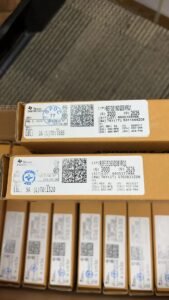
In tight markets, verify original sealed packaging, date code, lot traceability, MSL, and authorized-distributor documents before building inventory.
4. Recommended chips to evaluate
A. LPDDR5/LPDDR5X for robot inference and automotive IVI
Best for: humanoid/industrial robot main board, edge AI boxes, automotive infotainment, vision systems.
Examples buyers often request:
- Samsung LPDDR5X series, e.g. K3LK7K70BM-BGCP class packages by density
- SK hynix LPDDR5X H9HCNNNBKMMLHR-KNX class for mobile/edge AI
- Micron LPDDR5X MT62F series for automotive/industrial edge evaluation
Attribute table
| Product Attributes | Attribute Value |
|---|---|
| Brand | Samsung / SK hynix / Micron |
| Product Type | LPDDR5 / LPDDR5X |
| Example Series | K3LK class, H9HCNNN class, MT62F class |
| Density | 4GB / 8GB / 16GB / 32GB per package options |
| Speed | Up to 6400–8533 MT/s depending on grade |
| Package | FBGA, model-specific |
| Temperature | Commercial/industrial/automotive by suffix |
| Application | Robot inference, edge AI, automotive IVI, vision gateway |
B. DDR5 server RDIMM for AI and robot training/edge servers
Best for: AI servers, database, virtualization, robot simulation/training nodes.
Examples:
- Samsung M321R8GA0PB0-CWM, 64GB 5600MT/s class RDIMM
- SK hynix HMCG94AGBRA, 64GB 5600MT/s class RDIMM
- Micron MTC40F2047S1RC64BB1, 128GB 6400MT/s class RDIMM
Attribute table
| Product Attributes | Attribute Value |
|---|---|
| Brand | Samsung / SK hynix / Micron |
| Product Series | DDR5 RDIMM |
| Example Models | M321R8GA0PB0-CWM, HMCG94AGBRA, MTC40F2047S1RC64BB1 |
| Density | 16GB / 32GB / 64GB / 128GB options |
| Speed | 4800 / 5600 / 6400 MT/s depending on model |
| Form Factor | RDIMM |
| Application | Servers, AI training/inference, robot simulation, enterprise storage |
| Sourcing Note | Confirm ECC, rank, height, and OEM compatibility before stocking |
C. NOR Flash for boot, firmware, robot MCU, automotive, industrial
Best for: safe boot, MCU firmware, ECU, industrial controller, robot baseboard firmware.
Examples:
- Macronix MX25L12835F, 128Mb SPI NOR, industrial wide-temp options
- Winbond W25Q128JVFIQ, 128Mb SPI NOR; W25Q64JVSSIQ, 64Mb industrial-stable option
- GigaDevice GD25Q128CSIG, 128Mb SPI NOR for IoT; GD25VQ128C wide-temp/automotive-oriented option
Attribute table
| Product Attributes | Attribute Value |
|---|---|
| Brand | Macronix / Winbond / GigaDevice |
| Product Type | Serial NOR Flash |
| Example Models | MX25L12835F, W25Q128JVFIQ, W25Q64JVSSIQ, GD25Q128CSIG, GD25VQ128C |
| Density | 4Mb–512Mb common; 64/128Mb recommended for stocking evaluation |
| Interface | SPI/Quad-SPI |
| Voltage | Typically 2.7V–3.6V; check model |
| Temperature | Commercial/industrial/automotive options by suffix |
| Application | MCU boot, firmware, automotive ECU, industrial robot controller, gateway |
D. Industrial eMMC / UFS for robot OS, logs, OTA
Best for: robot mainboard OS, task storage, OTA packages, HMI, automotive infotainment.
Examples:
- Micron MTFC8GAKAJCN-4M IT, 8GB eMMC 5.1, industrial IoT orientation
- Kioxia THGBMHG8C2LBAIL, 64GB eMMC 5.1, automotive-oriented
- Samsung KLMAG1JETD-B041, 128GB eMMC 5.1; UFS options evaluated by project
Attribute table
| Product Attributes | Attribute Value |
|---|---|
| Brand | Micron / Kioxia / Samsung |
| Product Type | eMMC / UFS |
| Example Models | MTFC8GAKAJCN-4M IT, THGBMHG8C2LBAIL, KLMAG1JETD-B041 |
| Density | 8GB / 64GB / 128GB eMMC; UFS per project |
| Standard | eMMC 5.0/5.1; UFS 2.1/3.1/4.0 by model |
| Package | BGA, ball-count/model specific |
| Temperature | Industrial/automotive options by model suffix |
| Application | Robot OS, OTA, HMI, automotive IVI, industrial terminal |
E. SLC / SPI NAND and EEPROM for reliable logging and parameters
Best for: industrial robot event log, servo parameters, sensor calibration, configuration backup.
Examples:
- Micron MT29F4G01ABAFDWB, 4Gb SLC SPI NAND, 3.3V, wide-temp/high-reliability orientation
- GigaDevice GD5F1GQ4UAYIG, 1Gb SPI NAND, industrial option
- EEPROM: stock by BOM density 16Kb/32Kb/64Kb/128Kb/256Kb I2C/SPI
Attribute table
| Product Attributes | Attribute Value |
|---|---|
| Brand | Micron / GigaDevice / per BOM |
| Product Type | SLC/SPI NAND, EEPROM |
| Example Models | MT29F4G01ABAFDWB, GD5F1GQ4UAYIG, EEPROM by approved vendor |
| Density | NAND 1Gb/4Gb; EEPROM 16Kb–256Kb |
| Interface | SPI/QSPI; I2C/SPI for EEPROM |
| Voltage | Check model; 3.3V common for NAND |
| Reliability | Better write-cycle/long-life behavior than commodity multilevel NAND |
| Application | Robot logging, servo params, calibration, config backup |
5. Procurement rules for 2026–2027
- Confirm BOM before stocking. Do not buy generic memory just because the market is rising. Stock exact manufacturer, density, speed, temperature grade, and package.
- Add a robot/edge-AI line item. If your customers build robots, AGVs, AMRs, or vision edge boxes, qualify LPDDR5/5X, NOR, industrial eMMC, and SLC NAND even for small monthly volume.
- Separate long-life programs. Automotive, industrial, and medical designs may need 5–10 years of supply; give NOR, SLC, industrial eMMC, and qualified DDR4 higher safety stock.
- Dual-source critical memory. For NOR, eMMC, EEPROM, and where possible LPDDR, qualify two vendors with equivalent footprint/protocol.
- Lock lead time, not only price. In allocation periods, request forecast-based framework supply and written lead times.
- Inspect authenticity. Rising prices increase refurbished/relabeled risk; require original sealed packs, lot/date codes, MSL labels, and distributor authorization.
Conclusion: AI servers, automotive electronics, and humanoid robots such as Tesla Optimus are converging on the same problem — memory and storage supply. Musk’s Optimus memory cuts show that even advanced robots are constrained by DRAM/NAND availability; Micron’s 200GB+ DRAM per humanoid estimate shows the upside if robot volume scales. For B2B stocking, prioritize confirmed BOMs, robot/edge memory tiers, industrial/automotive grades, and traceable sources instead of speculative bulk buying.
Request a quote: share your BOM densities, temperature grade, and monthly build plan; we can propose DDR5/LPDDR/NOR/eMMC/SLC cross-brand alternatives with lead-time validation.